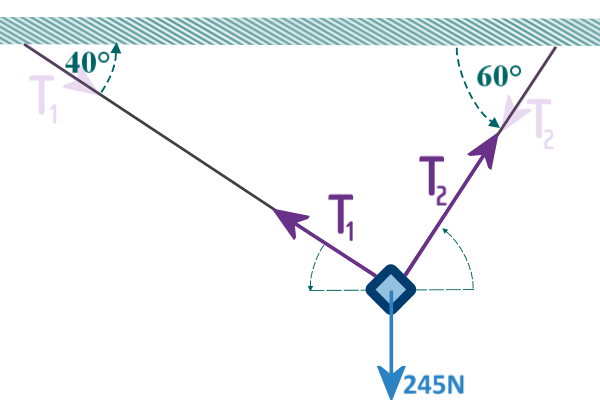
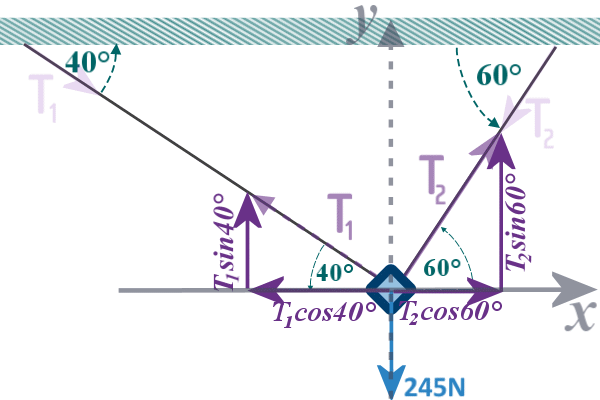
Exercise 4EEquilibrium of Concurrent Coplanar ForcesWhen we have a combination of forces acting in two dimensions, we can define any two perpendicular lines as our ‘axes’If our particle is sitting on a surface, we will always define our x-axis ‘along the surface’ and our y-axis ‘perpendicular to the surface’But if our particle is held in place by a string (i.e. it is not sitting on a surface), then our x-axis will be ‘horizontal’ and our y-axis ‘vertical’e.g. A 20 kg bike hanging from two ropes attached to the ceiling. The first rope makes an angle of 40° with the ceiling, while the second rope makes an angle of 60° with the ceilingOur force diagram would look like this:
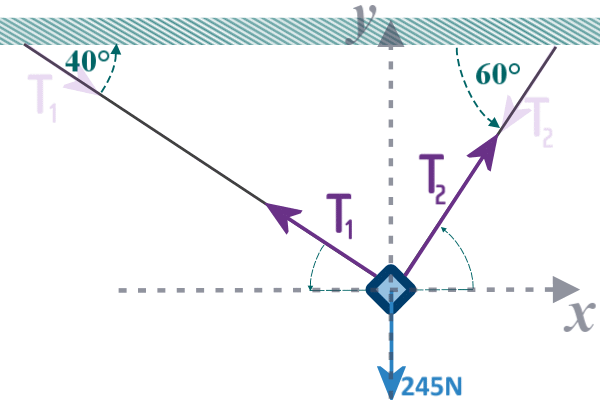
And we would add in our axes like this:
Then we are ready to start resolving forces...
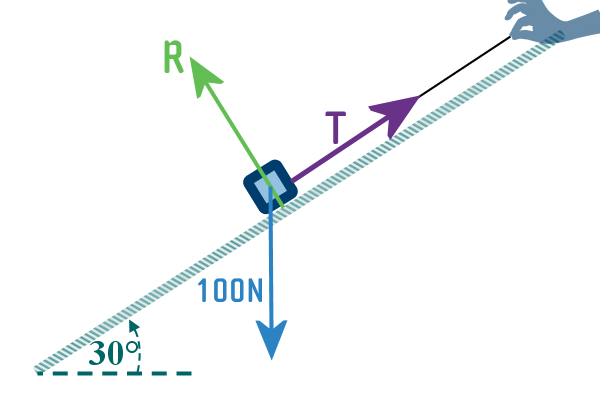
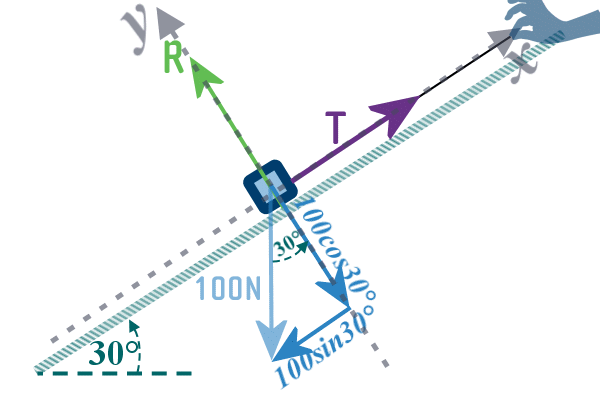
e.g. If we have a of crate of weight 100 N being held in place on a smooth 30° slope by a string being pulled parallel to the pushed up a 30° smooth slope, then our force diagram looks like this:Our force diagram would look like this:
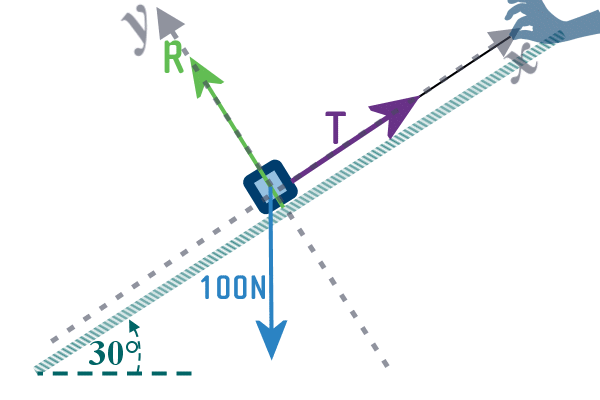
And we add in our axes like this:
Then we are ready to start resolving forces...
Resolving ForcesWe need to resolve any force which is not parallel to the axesThat means that we replace any froce that is not parallel to our axes with two ‘component’ forces’...Do do this, start at the START of the force you are trying to replace and drive along ‘x’ and then parallel to ‘y’ (or the other way around; drive along ‘y’ and then parallel to ‘x’), until you get to the END of the force you are trying to replaceThese two components replace the original forceSo, going back to this example: e.g. A 20 kg bike hanging from two ropes attached to the ceiling. The first rope makes an angle of 40° with the ceiling, while the second rope makes an angle of 60° with the ceiling
Now we are ready to apply our rules for Equilibrium:
So, in this case: Forces DOWN = Forces UP Forces LEFT = Forces RIGHT
└─────┬─────┘ └────┬────┘ └─────┬─────┘ └─────┬──────┘
┌─┴─┐ ┌────┴────────────────┐ ┌───┴─────┐ ┌─────┴───┐
245 = T1 sin 40 + T2 sin 60 T1 cos 40 = T2 cos 60
We can then find the values for cos 40, cos 60, sin 40 and sin 60 (from the calculator) and then plug them into the equations and solve simultaneously...
Going back to our second example:e.g. If we have a of crate of weight 100 N being held in place on a smooth 30° slope by a string being pulled parallel to the pushed up a 30° smooth slope, then our force diagram looks like this: |
Equilibrium on a SlopeAlong your y-axis:
Forces ↙ = Forces ↗ |
So, in this case:
   Forces ↘   =  Forces ↖		 Forces ↙   =  Forces ↗
  └────┬───┘   └────┬────┘		└────┬───┘    └───┬────┘
 ┌─────┴────┐      ┌┴┐    		┌────┴─────┐     ┌┴┐
  100 cos 30  =     R			 100 sin 40 =     T
This is even easier - we don't need simultaneous equations - just plug them into the calculator...
Lami's Theorem: 3-force Equilibrium
A particle can only be in equilibrium under the action of TWO forces (2-force equilibrium), if the two forces have exactly the same magnitude and if they point in exactly opposite directions. I.e. they are equal and opposite...
That should be obvious?
A more interesting situation is 3-force equilibrium - for instance, take this example:
e.g. A 40 cm deep shelf is attached to a wall. The shelf has
neglibible mass. A wire connected to the front of the shelf is
secured to a point on the wall 30 cm from the back of the shelf.
The tension in this wire helps ensure the shelf remains
horizontal. An metal ornament of mass 5 kg is placed on the shelf,
10 cm from the front of the shelf.
Find the tension in the wire
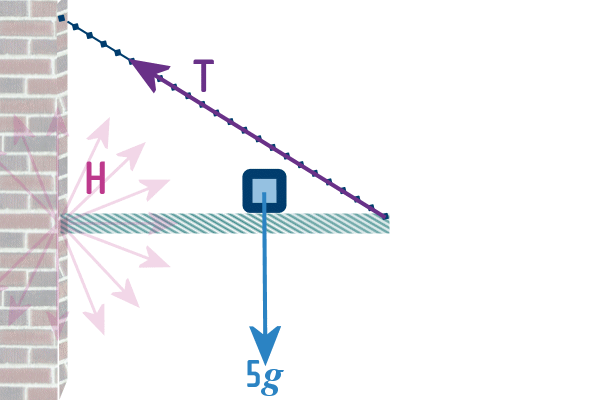
Our diagram starts off looking like this:
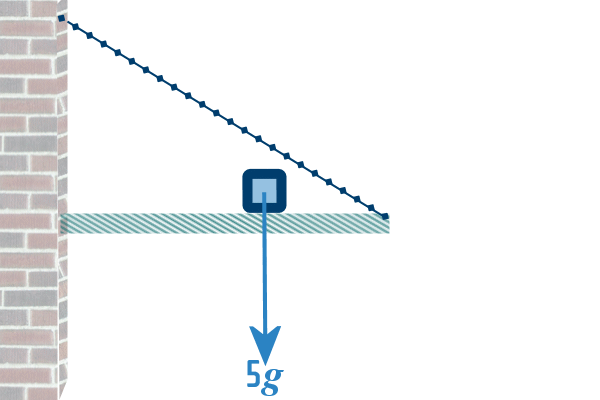
We know the ornament has weight 5g and we know there must be a tension in the wire:
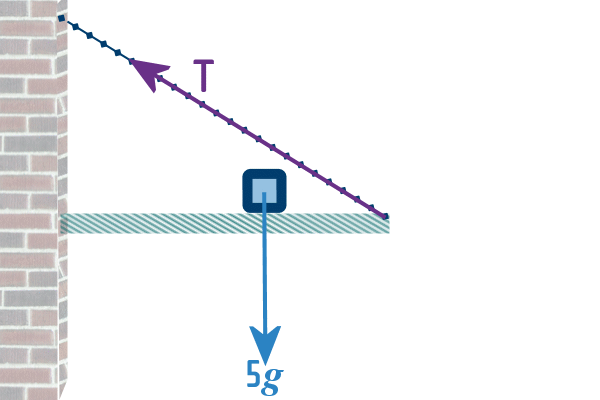
But as it stands, that can't be the complete force diagram of the situation (2 forces can only be in equilibrium if they are equal and opposite). Our two forces aren't opposite, so there must be a third force that we've forgotten...
Of course, the shelf must be ‘fixed’ to the wall - otherwise the whole shelf would just drop...
Okat, so there's a third force, at the point where the shelf meets the wall - let's call that the 'HINGE' force; but what direction does that force act in?
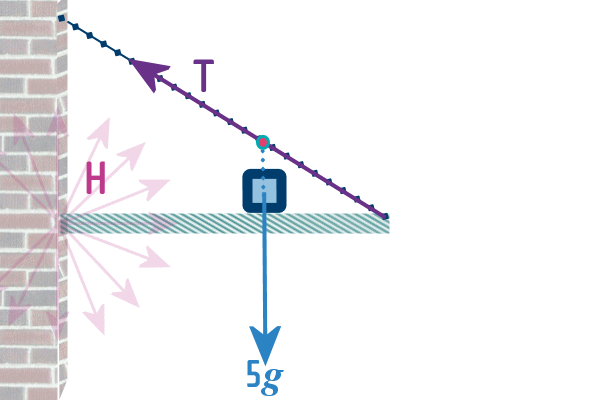
Well, that's where Lami's Theorem can help us: Lami said, "Yuh affi know bredren, if yoh got three forces ah ina equi-poop-um, dey must aal act through ah single point" (he was Jamaican you know)
So, we start by finding where our first two forces meets (which mean we have to extend the weight backwards - but don't worry...):
Then we know our missing 'HINGE' force must pass through that same point:
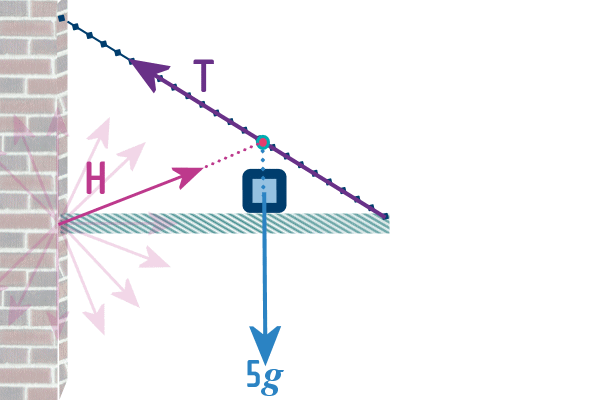
So, Lami helps us to get our diagram right - they we can carry on with our anaylsis...
Question 1: Our forces are: weight = 20g, and reaction = R
There is also a horizontal force preventing it from sliding down the slope:
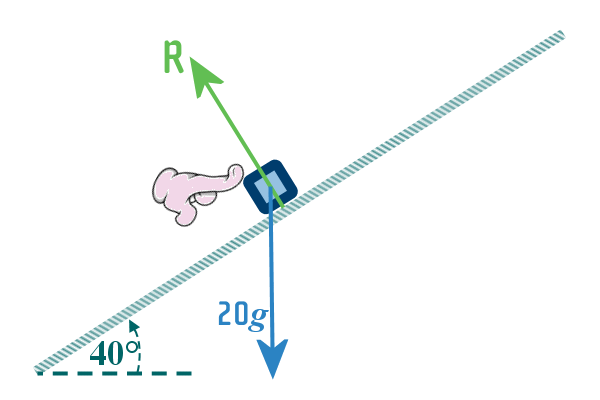
Which I've added onto the diagram:
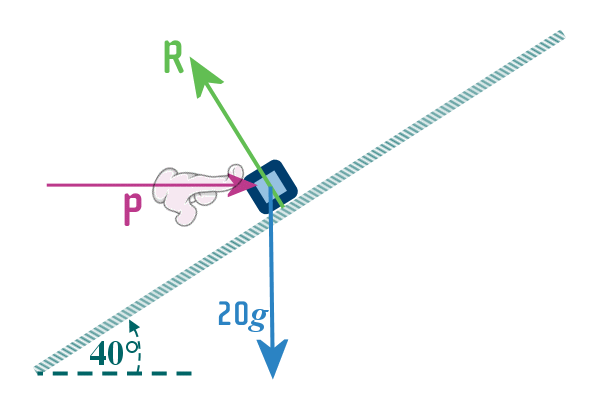
You know, I prefer all of my forces to be pointing OUT of the particle, so I've moved the force ‘P’ to the other side:
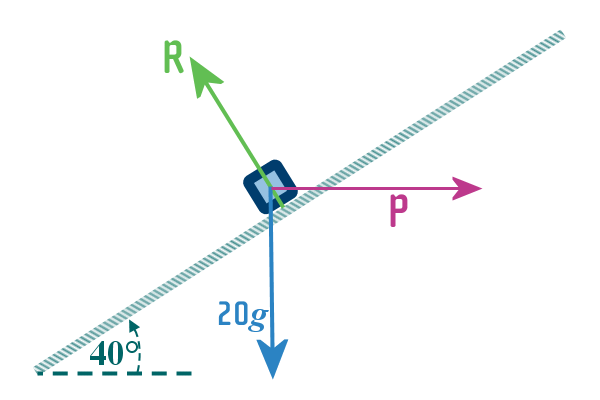
Okay- let's place our axes, along the slope and perpendicular to the slope:
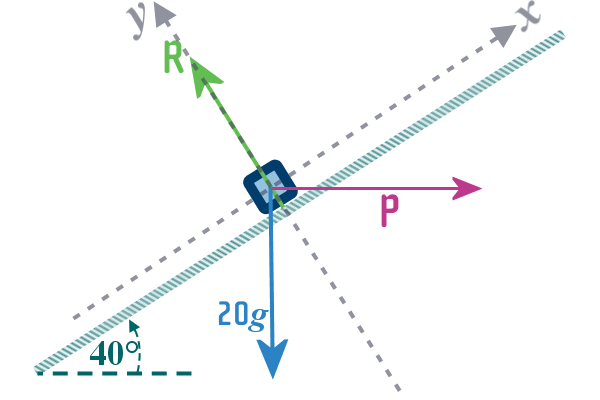
And now resolve the weight and the force ‘P’ into components parallel to and perpendicular to the slope:
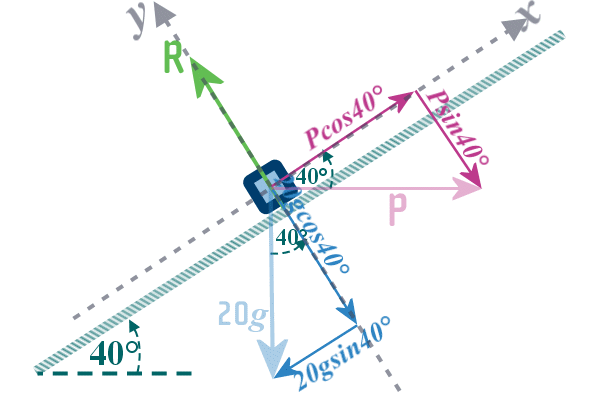
Now we are ready to apply our rules for Equilibrium:
Equilibrium on a SlopeAlong your y-axis:
Forces ↙ = Forces ↗ |
So, in this case:
           Forces ↘      =  Forces ↖		 Forces ↙   =  Forces ↗
          └────┬───┘       └────┬───┘		└────┬───┘    └───┬────┘
  ┌────────────┴────────┐      ┌┴┐    		┌────┴─────┐  ┌───┴────┐
   20g cos 40 + F sin 40 =      R 		 20g sin 40 =  F cos 40
Solving the green equation allows us to find ‘P’
Question 2: We can re-draw their diagram, adding in the
weight of the body and the tension in the rope:
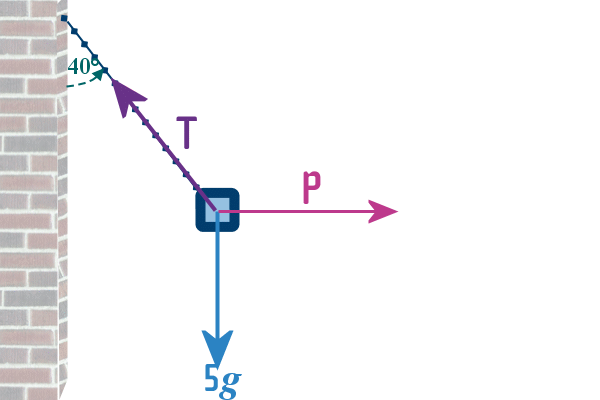
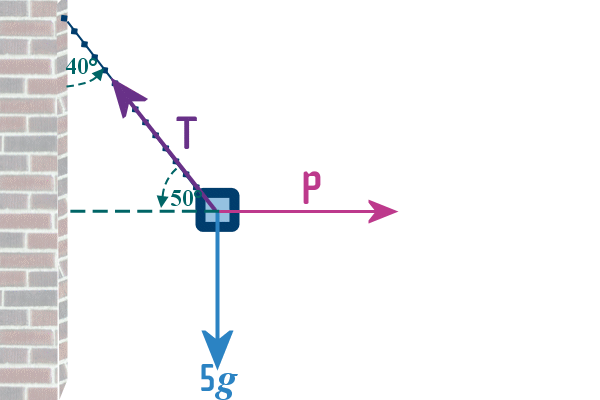
I can label the angle between the string and the horizontal as
50°:
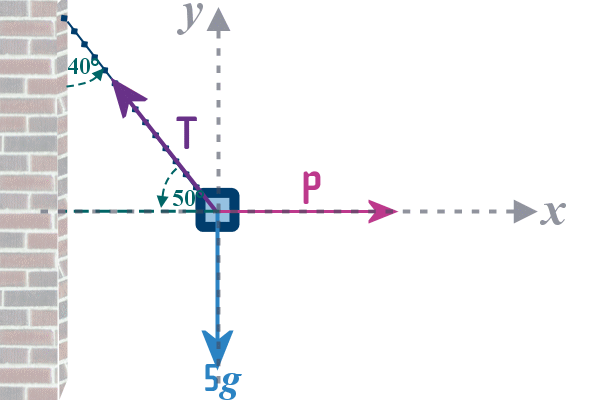
Okay - let's add in our axes now:
And resolve the tension into two components, along ‘x’ and
along ‘y’:
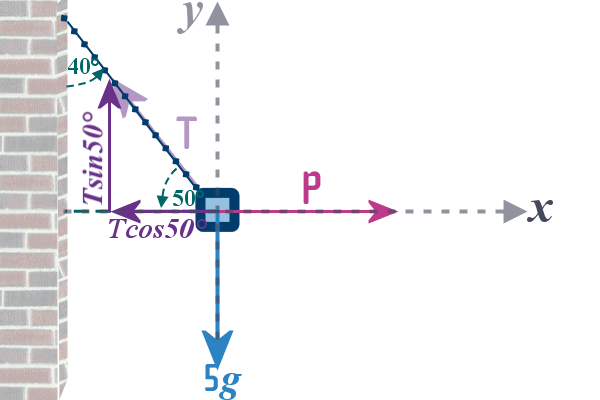
Now we are ready to apply our rules for equilibrium:
Equilibrium Along your y-axis:
Forces DOWN = Forces UP |
So, in this case:
   Forces DOWN  =  Forces UP		 Forces LEFT  =  Forces RIGHT
  └─────┬─────┘   └────┬────┘		└─────┬─────┘   └─────┬──────┘
       ┌┴─┐       ┌────┴───┐		  ┌───┴────┐         ┌┴┐
        49      =  T sin 50		   T cos 50   =       P
We can then solve each equation...
Question 4: So, Annika, you are walking two dogs that you picked up on the ‘love my dog’ website:
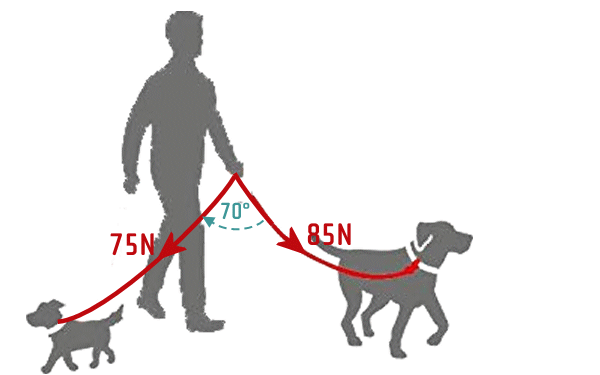
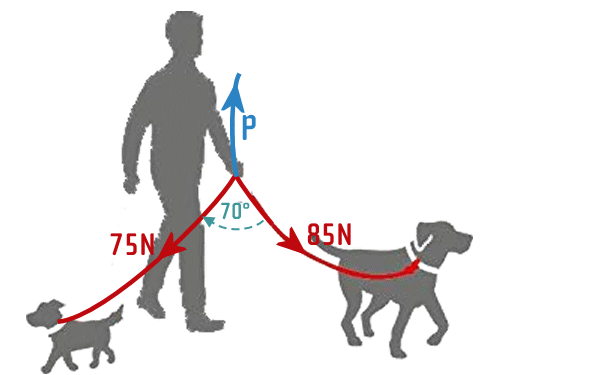
You arm must be hurting from the contant force you have to apply:
We could add in some axes - I suppose it makes sense to line up one of the axes with one of the forces:
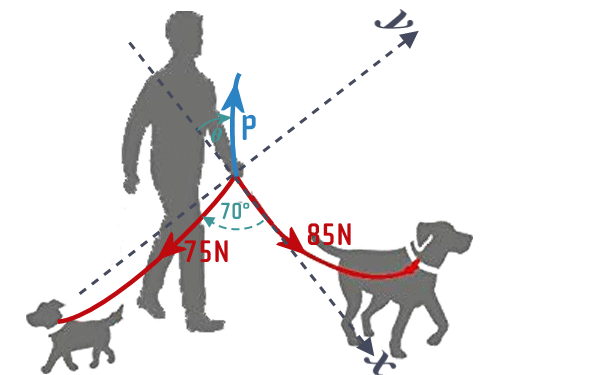
Then let's find ‘x’ and ‘θ’...
Note: An alternative method for this type of question is to use a triangle of forces
Question 5: So, the diagram looks like this:
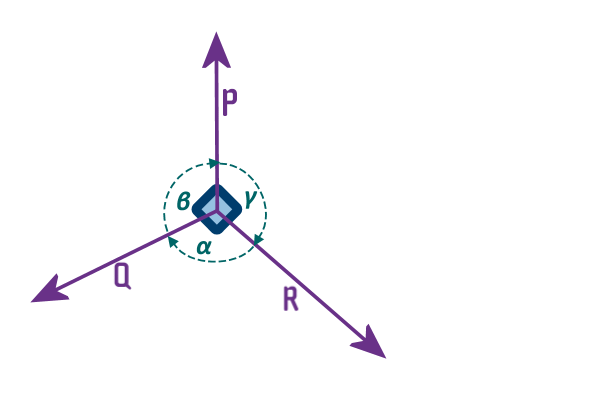
Let's add in a horizontal x-axis and a vertical y-axis:
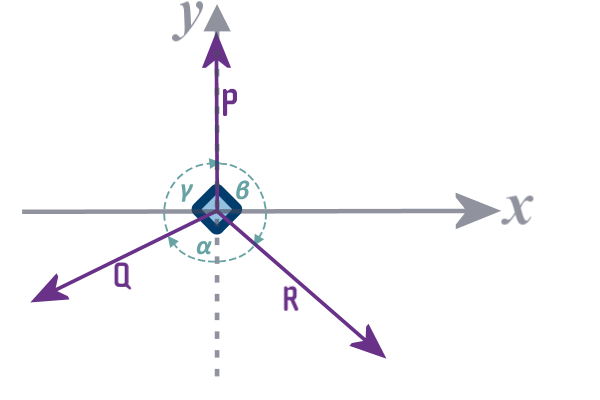
Okay - we need to know these two angles:
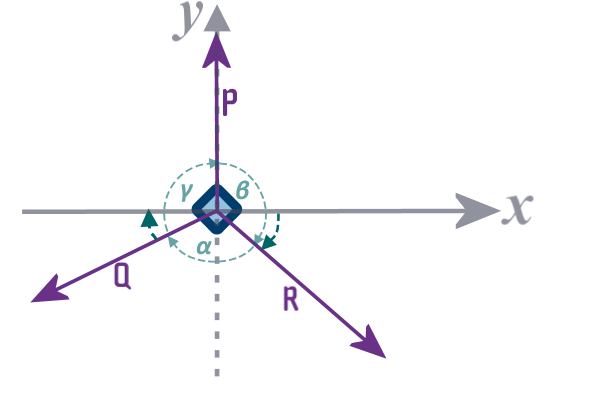
Which is easy:
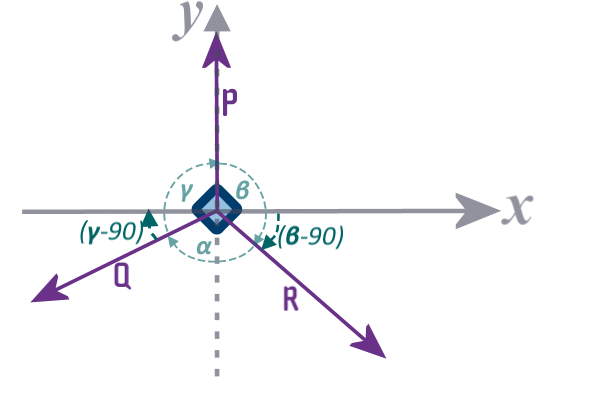
So now we can resolve the forces Q and R into components:
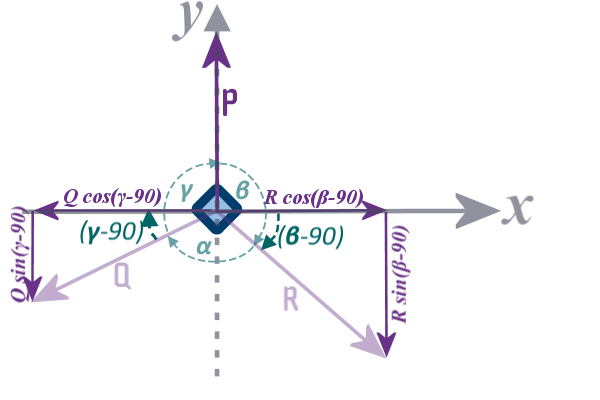
Now we are ready to apply our rules for Equilibrium:
Equilibrium Along your y-axis:
Forces DOWN = Forces UP |
So, in this case:
              Forces DOWN  =  Forces UP		 Forces LEFT  =  Forces RIGHT
             └─────┬─────┘   └────┬────┘ 	└─────┬─────┘   └─────┬──────┘
 ┌─────────────────┴─────┐       ┌┴┐		 ┌────┴────┐     ┌────┴────┐
  Qsin(γ-90) + Rsin(β-90)  =      P		  Qcos(γ-90)  =   Rcos(β-90)
Let's start with the green equation:
Can we simplify cos(γ-90) and cos(β-90), either by expanding the compound angles, or by knowing that cos(A-B) ≡ cos(B-A) and knowing your complemenary angle rules...
Question 6: We need to add in the weight, reaction and tension...
Then the axes...
Then resolve the weigth and the tension
Then apply our rules...